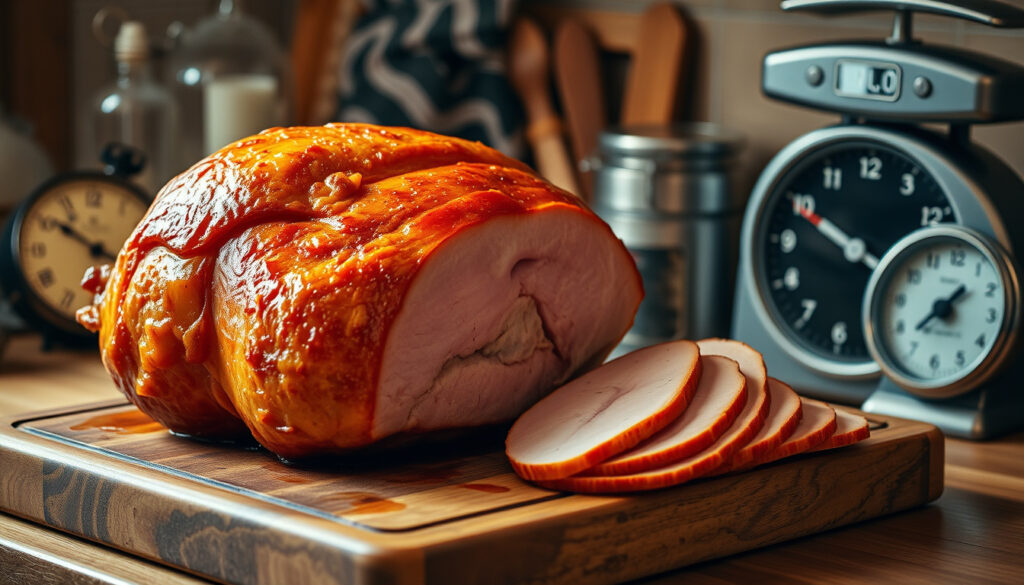
Skinkestek Steketid Per Kilo – Rätt Tid För Saftig Skinka
Pork roast represents one of Norway’s most beloved Sunday dinners, yet achieving that perfect balance between a beautifully browned exterior and a tender, juicy interior requires understanding one fundamental principle: cooking time correlates directly with weight. For a pork roast to reach its full potential, the relationship between steketid (cooking time) and per kilo (per pound) becomes the cornerstone of successful preparation.
Domestic kitchens across Norway have witnessed countless pork roasts emerge from ovens both triumphant and disappointing. The difference often lies not in the quality of the meat or the seasoning choices, but in the precise attention paid to cooking times. Whether preparing a traditional ribbe for Christmas or a simple helstekt svinekjøtt for a regular family dinner, the math remains consistent and unforgiving.
Grunnleggende Steketid per Kilo
The fundamental guideline for pork roast cooking times operates on a per-kilo basis that has proven reliable across generations of Norwegian home cooks. At the foundation of this system lies a simple calculation: approximately 20-25 minutes per kilogram at 180°C for bone-in cuts, while boneless roasts require slightly longer at 25-30 minutes per kilogram due to their more uniform density.
This baseline serves as a starting point rather than an absolute rule. Variables including the specific cut, initial meat temperature, oven characteristics, and desired doneness all influence the final cooking duration. A 1.5 kilogram ribbe will not require exactly double the time of a 750-gram piece; the relationship follows diminishing returns as mass increases.
Professional kitchens and experienced home cooks often develop their own variations on these guidelines through repeated experimentation. The key lies in understanding why these times exist rather than simply memorizing numbers. Heat penetration through meat follows predictable patterns, and respecting these patterns rewards the cook with consistently excellent results.
Viktige Innsikter om Steketid
Understanding the science behind cooking times transforms roast preparation from guesswork into informed decision-making. When heat enters meat, it travels from the exterior inward, creating a gradient from well-done at the surface to potentially undercooked at the center. This gradient moves predictably, advancing roughly one centimeter every four to five minutes at conventional roasting temperatures.
The resting period following roasting deserves equal consideration alongside active cooking time. A roast removed from the oven continues cooking internally for fifteen to twenty minutes as residual heat distributes through the tissue. Accounting for this carryover cooking means removing meat from the oven when it registers five to eight degrees below the target temperature, preventing the common mistake of an overcooked exterior paired with a gray, dried-out band beneath the surface.
Oven calibration variations compound the complexity of timing calculations. Household ovens commonly deviate fifteen to twenty-five degrees from their set temperatures, making calibrated oven thermometers essential for precision cooking. A 170°C setting might actually deliver 185°C or 155°C depending on the appliance, fundamentally altering cooking times regardless of what the recipe specifies.
Detaljert Steketid Tabell
| Vekt (kg) | Ben-i-kjøtt | Benløst | Kjernetemperatur |
|---|---|---|---|
| 0.5 – 0.75 | 20-25 min/kg | 25-30 min/kg | 65-68°C |
| 0.75 – 1.0 | 18-22 min/kg | 23-28 min/kg | 65-68°C |
| 1.0 – 1.5 | 15-20 min/kg | 22-26 min/kg | 65-68°C |
| 1.5 – 2.0 | 14-18 min/kg | 20-24 min/kg | 65-68°C |
| 2.0 – 2.5 | 13-16 min/kg | 18-22 min/kg | 65-68°C |
| 2.5 – 3.0 | 12-15 min/kg | 17-20 min/kg | 65-68°C |
Detaljer om Ulike Stykningsdeler
The pork shoulder, known as bog in Norwegian, presents one of the most forgiving cuts for roasting. Its generous marbling and connective tissue content mean that extended cooking times actually improve the final result, breaking down collagen into silky gelatin that enriches the entire dish. A two-kilogram bog can comfortably roast for three to three and a half hours at reduced temperature, emerging extraordinarily tender.
The loin section, either as ribbe with its characteristic fat cap or as center-cut medallions, demands more precise timing. With less internal fat and tighter muscle structure, these cuts transition from perfect to overcooked within narrow temperature windows. A loin roast should rest immediately upon reaching temperature, with no extended holding time that would continue the cooking process.
Belly pork, the traditional choice for Christmas ribbe, occupies a unique position in the roasting hierarchy. Its layered structure of fat between meat sections creates built-in basting that protects the leaner portions during extended cooking. The skin, when scored properly and exposed to high heat at the finish, transforms into the cherished CRISPY SVOR that defines the perfect ribbe.
Tidslinje for Perfekt Svinekjøtt
Planning a pork roast dinner requires coordinating multiple stages beyond the oven time itself. The preparation phase, including seasoning, bringing meat to room temperature, and any brining or dry-curing, may span hours or even days for certain preparations. A proper timeline accounts for these preliminary steps alongside active cooking and resting periods.
Most pork roast preparations benefit from a thirty to forty-five minute tempering period at room temperature before roasting. This brings the entire mass to uniform temperature, ensuring more predictable and even cooking throughout. Skipping this step means the oven must work harder to bring the cold center to temperature, often resulting in overcooked exterior layers before the interior reaches acceptable temperature.
The resting period, typically fifteen to twenty minutes for smaller roasts and up to thirty minutes for larger cuts, serves multiple purposes. Protein fibers that compressed during cooking gradually relax and reabsorb juices that migrated toward the surface. Cutting into a roast too soon releases these juices onto the carving board rather than into the meat where they belong.
Klarhet om Temperatur og Tid
Modern food safety guidelines from the Norwegian Food Safety Authority recommend pork be cooked to an internal temperature of at least 62°C for medium-rare results, with 65-68°C representing the standard target for well-done preparations. These temperatures eliminate concerns about parasites while preserving reasonable moisture content in the finished product.
The texture and flavor profile desired ultimately guide temperature selection. Some traditional preparations, particularly those originating from regions where raw or lightly cooked pork featured prominently in cuisine, accept temperatures as low as 58°C for truly pink centers. However, these preparations carry inherent risks that modern guidelines appropriately discourage.
Meat thermometers eliminate the uncertainty that otherwise plagues roast timing. Instant-read digital thermometers provide accurate readings within seconds, while probe-style thermometers allow continuous monitoring without opening the oven door and losing heat. Investing in quality thermometers pays dividends in consistently excellent results.
Analalyse av Vanlige Feil
The most prevalent error in pork roast preparation involves excessive temperature during the cooking process. Many home cooks, anxious to serve promptly or uncertain about timing, increase oven temperature in hopes of accelerating the process. This approach invariably produces inferior results, with gray bands of overcooked tissue surrounding potentially acceptable interiors.
Opening the oven door repeatedly to check progress disrupts the cooking environment significantly. Each opening releases substantial heat that the oven must then reabsorb, extending overall cooking time while creating temperature fluctuations that affect the meat unpredictably. Trusting initial temperature settings and timing eliminates this source of inconsistency.
Insufficient resting time wastes the careful cooking that preceded it. The relaxation and reabsorption of juices that occurs during resting contributes measurably to both flavor and texture. Rushing this phase undermines the entire preparation, transforming careful cooking into disappointing serving.
Ekspertuttalelser
“The difference between an adequate pork roast and an exceptional one rarely exceeds fifteen minutes of cooking time. Understanding when to stop, rather than when to continue, separates memorable meals from forgettable ones.”
“Temperature, not time, determines doneness. Time serves merely as a rough guide for planning purposes, while internal temperature tells the true story of what is happening within the meat.”
Oppsummering
Mastering pork roast preparation requires reconciling multiple variables into a cohesive approach. The steketid per kilo guidelines provide essential starting points, but successful roasting demands attention to the underlying principles rather than rigid adherence to numbers alone. Temperature measurement through reliable thermometers supersedes timing estimates as the true indicator of progress.
The interplay between cut selection, cooking temperature, and total time creates the framework within which excellent results become predictable. Bone-in and boneless cuts behave differently; high-fat and lean sections respond distinctively to heat application. Understanding these characteristics empowers the cook to adapt techniques to whatever situation presents itself.
Resting, often overlooked in rushed preparations, represents the final and essential step in achieving roast excellence. The fifteen to thirty minutes following oven removal transform cooked protein into juicy, tender meat worth the attention invested throughout the preparation. This patience rewards both the cook and those gathered around the table.
Ofte Stilte Spørsmål
Hvor lang tid tar det å steke en 1.5 kg svinekam?
For en 1.5 kilograms svinekam med bein, beregn cirka 20-25 minutter per kilo ved 180°C, totalt omtrent 30-40 minutter. Benløs svinekam av samme vekt krever 25-30 minutter per kilo. Bruk alltid steketermometer for å bekrefte kjernetemperaturen på 65-68°C.
Kan man steke svinekjøtt ved lavere temperatur?
Ja, lavere temperaturer med lengre steketid gir ofte bedre resultat. Ned mot 120-140°C med 40-50 minutter per kilo produserer ekstremt mørt kjøtt, spesielt for hardere cuts som bog. Tidstakingen må justeres tilsvarende, og koketiden øker betraktelig.
Hva er riktig kjernetemperatur for svinekjøtt?
Den anbefalte kjernetemperaturen for gjennomstekt svinekjøtt er 65-68°C. For medium resultater kan 62-65°C aksepteres. Noen tradisjoner aksepterer 58-60°C for lettere stekt kjøtt, men dette innebærer høyere risiko og anbefales ikke av mattrygghetshensyn.
Skal svinekjøtt hvile før oppskjæring?
Absolutt. Alle svineroster bør hvile i minst 15-20 minutter etter steking. Større stykker på 2-3 kg kan trenge opptil 30 minutter. Denne hvileperioden lar safterne fordele seg jevnt gjennom kjøttet igjen, og resultatet blir betydelig mer saftig og smakfullt.
Hvordan unngå tørt svinekjøtt?
Tørt svinekjøtt skyldes vanligvis overdreven steketid eller for høy temperatur. Velg stykninger med god fettmarmorering, bruk steketermometer for presisjon, og la kjøttet hvile tilstrekkelig. En stek someler mot slutten kan tilføre fuktighet til magrere stykker.
Flere relaterte innlegg
 Norge Italia billetter 2026: Priser, kjøp og guide
 Ecco Snow Mountain – guide til vinterstøvler
 PM og AM: Betydning, forskjell og hvordan du unngår forvirring
 Trekke om stol – pris, fremgangsmåte og tips
 Øyunn Krogh genser – oppskrift, størrelse og historie
 Mester Grønn Oslo S – Din blomsterbutikk på Oslo Sentralstasjon
 Røde hunder utslett – symptomer, behandling og varighet
 Nike Store Oslo – åpningstider, adresse og butikker